Understanding CRS
Chronic rhinosinusitis (CRS) is inflammation of the nose and sinuses lasting more than 12 weeks, despite treatment. Some patients also develop nasal polyps — soft, painless growths inside the nose and sinuses — a form called CRSwNP (chronic rhinosinusitis with nasal polyps).
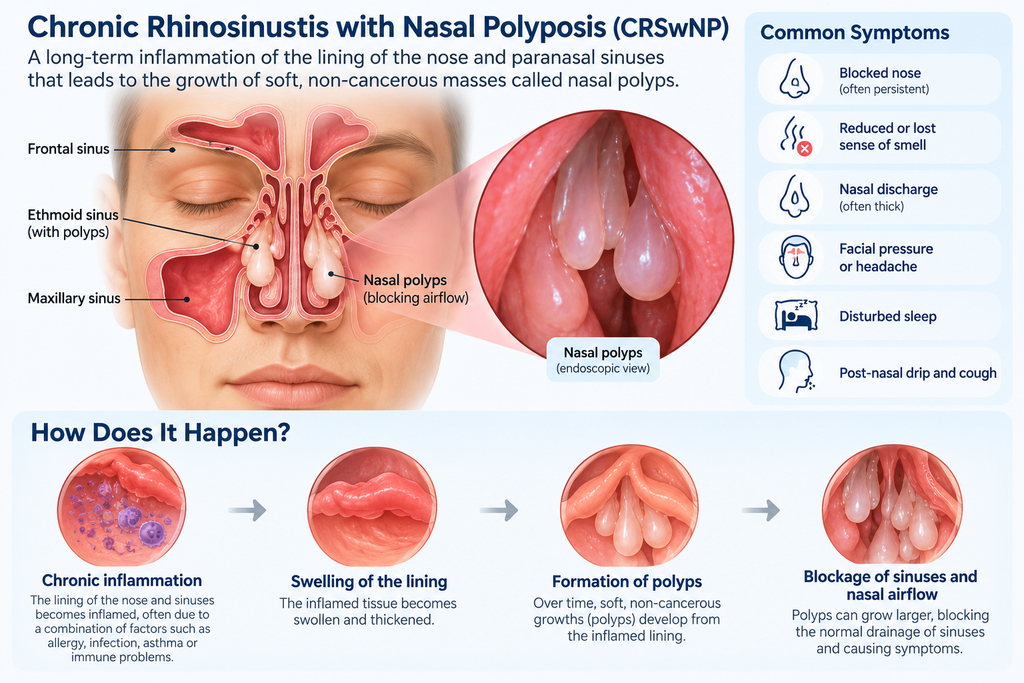
Common symptoms
- Persistent blocked or stuffy nose
- Thick nasal discharge or post-nasal drip
- Reduced or lost sense of smell
- Facial pain or pressure, especially around the eyes and cheeks
- Headache that’s worse when bending forward
What causes it?
CRS develops from ongoing inflammation of the sinus lining, often triggered or worsened by allergies, asthma, structural issues like a deviated septum, or sensitivity to certain medications (e.g. aspirin). It isn’t caused by a single infection — it’s a chronic inflammatory condition.
When to see an ENT specialist
See a specialist if symptoms last more than 12 weeks, keep coming back, or don’t improve with over-the-counter treatments — especially if you’ve lost your sense of smell or have facial pain.
How it’s assessed
Diagnosis usually combines a symptom history, nasal endoscopy, and a CT scan. Symptom severity is often scored using validated tools like SNOT-22 or the NOSE scale, and CT findings are staged using the Lund-Mackay system — the same scoring tools available on our [ENT Clinical Scoring Toolkit].
Treatment options
• Nasal saline rinses and steroid sprays (first-line for most patients)
• Oral steroids or antibiotics for flare-ups
• Newer biologic medications for severe polyp disease
• Endoscopic Sinus Surgery (FESS) when medical treatment isn’t enough — [see our FESS patient information page]
Not sure how severe your symptoms are? Try our free SNOT-22 and NOSE Scale self-assessment tools before your appointment.