ENDOSCOPIC SINUS SURGERY (FESS)
Functional Endoscopic Sinus Surgery – Patient Information
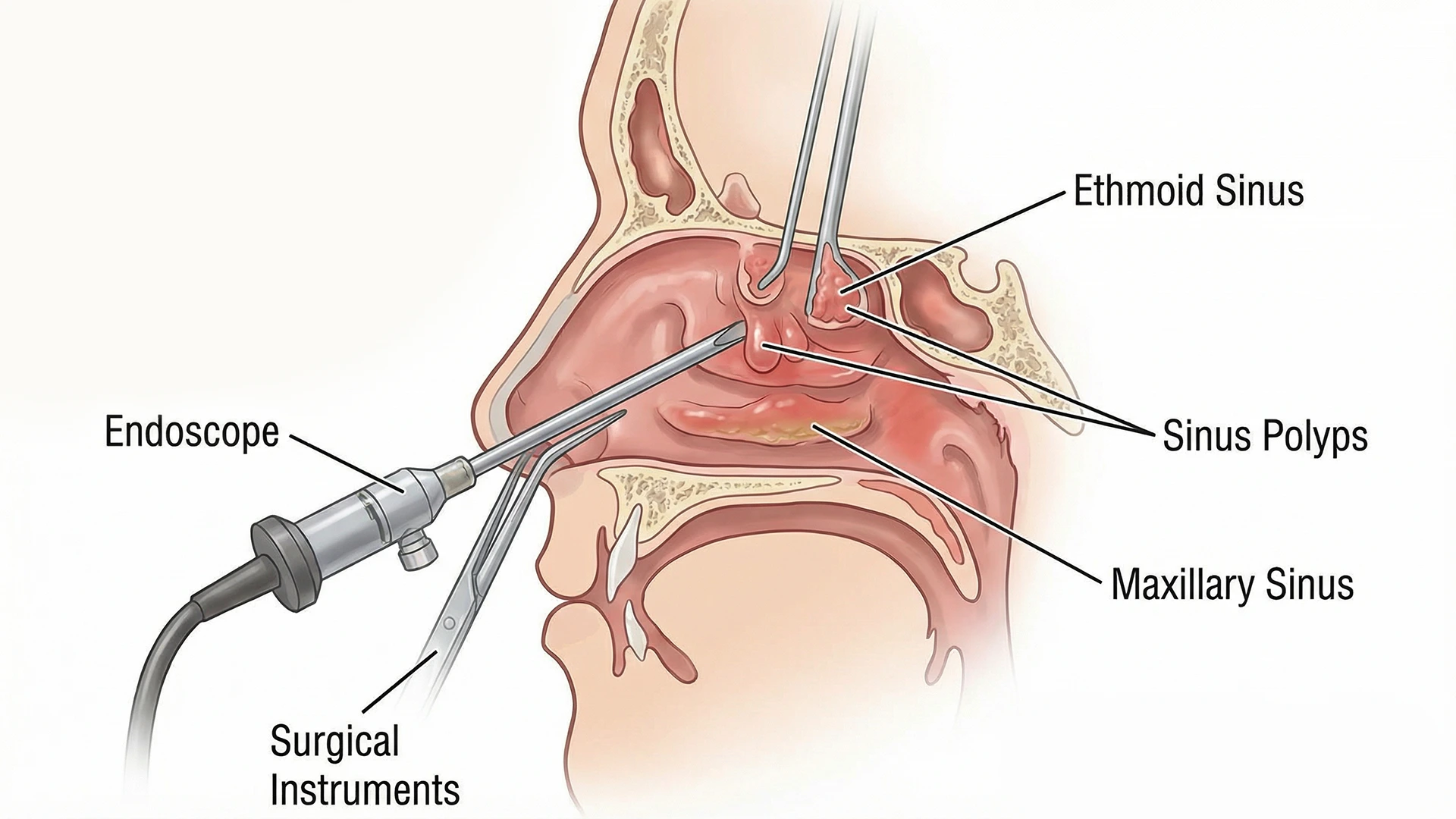
What is this operation?
Endoscopic Sinus Surgery (ESS/FESS) is a minimally invasive procedure performed using a small camera (endoscope) through the nose. The operation helps remove disease, open blocked sinuses, and improve sinus drainage and breathing.
Why do I need this surgery?
- Chronic sinusitis not responding to medication
- Nasal polyps
- Recurrent sinus infections
- Nasal mass or tumor
- Reduced sense of smell
What to Expect After Surgery
- Nasal blockage due to swelling or packing
- Mild pain or discomfort
- Blood-stained nasal discharge
- Crusting inside the nose
- Improvement occurs gradually
Recovery Time
- Hospital stay: Day case or 1 day
- Return to normal activity: 1–2 weeks
- Full recovery: 3–6 weeks
Post-operative Care (DOs)
- Take medications as prescribed
- Use saline nasal irrigation regularly
- Sleep with head elevated
- Attend follow-up visits for cleaning
- Maintain nasal hygiene
What to Avoid (DON’Ts)
- Do not blow nose for 1–2 weeks
- Avoid sneezing with mouth closed
- Avoid heavy lifting or straining
- Avoid dusty or smoky environments
- Avoid swimming initially
Possible Complications
- Bleeding
- Infection
- Adhesions (scar formation)
- Persistent symptoms
- Rare: eye injury, vision problems, CSF leak
Follow-up
- First visit: 5–7 days after surgery
- Regular cleaning and monitoring required
Key Advice
- Regular nasal cleaning is essential
- Symptoms improve gradually
- Avoid pressure changes and strain
Seek Immediate Medical Help
Heavy bleeding, high fever, severe headache, neck stiffness, vision changes, eye swelling, or clear watery discharge from the nose require urgent medical attention.